Commercial · Toronto
Commercial-Grade Lock Replacement
Overnight someone forced the back door, and the cylinder face is scarred, the metal around the strike has pulled loose from the frame, and the latch no longer sits flush.
Commercial-Grade Lock Replacement
In plain words
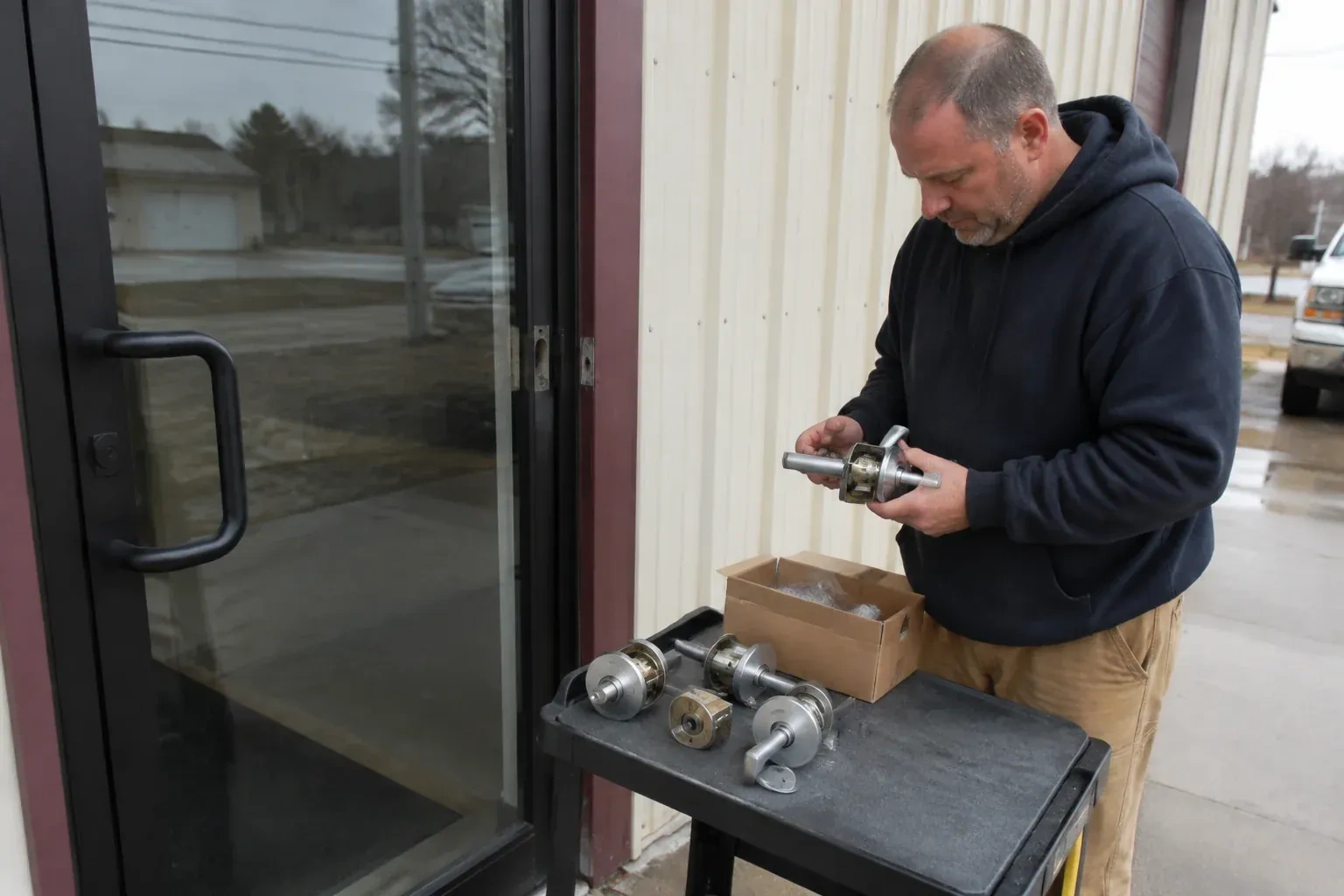
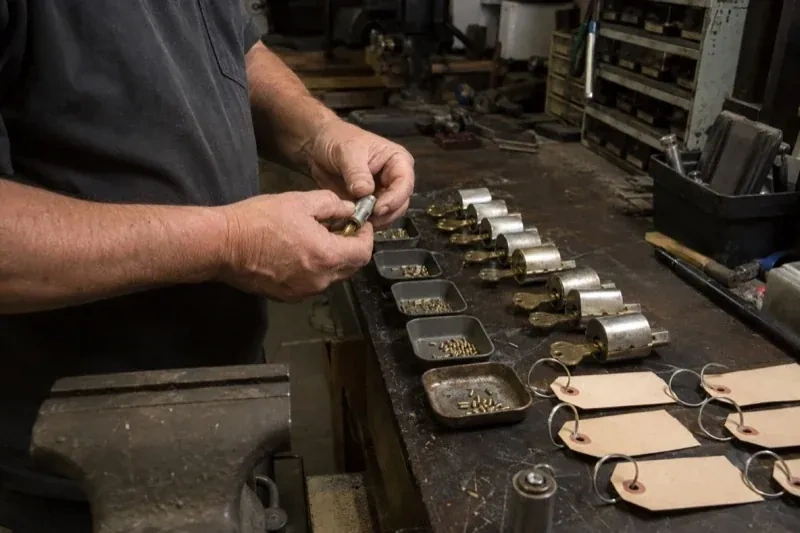
Where a home lockout is mostly about getting one door open again, a commercial lock replacement is mostly a decision about a system: how this one door's hardware fits into every other lock the business already manages. The locksmith examines the existing keying, whether cylinders are standard, interchangeable-core or restricted, and whether other doors should be keyed the same way as this one. New hardware is chosen to match the door's fire rating and occupant load where those apply, installed without altering the door's existing prep, and finished with keys cut, tested and recorded in the business's own key-control log.
How the visit goesOvernight someone forced the back door, and the cylinder face is scarred, the metal around the strike has pulled loose from the frame, and the latch no longer sits flush.
Toronto
How the visit goes
Reading the door before the lock
The door tells the locksmith what kind of hardware it can even accept. A hollow-metal or solid wood door with a mortise pocket cut into the edge takes a mortise lock body; an aluminum storefront door with a narrow stile takes a purpose-built narrow-stile lock or hookbolt; a standard cylindrical bore takes a heavy-duty lockset sized to that hole pattern. Handing, swing, backset and existing strike location are measured so the replacement drops into the prep that is already there rather than requiring the door itself to be re-cut.
Testing under real conditions before signing off
The finished hardware is cycled from both sides, under the door's normal swing and closing force, and by more than one person where staff are on site to try it, since a lock that operates cleanly for one hand may bind for another depending on height and grip. Any electric strike or reader tie-in is triggered several times to confirm consistent release. Only once the hardware performs the same way on repeated tries is the work considered finished rather than merely installed.
A storefront that closes the way it should
For a narrow-stile or glass storefront door, the finished job means the hookbolt or deadlatch engages fully across its travel every time, without the shoulder-check that a worn or mismatched lock used to need. Staff closing up for the night can throw the lock once and trust it caught, and the business is no longer relying on a habit of double-checking a door that should simply work. The hardware's finish is also suited to public-facing use, holding its appearance under daily handling.
Commercial-Grade Lock Replacement
In the van
- Key-control log and tags
- Narrow-stile storefront lock
- Restricted keyway cylinder
- Mortise lock body
- Interchangeable-core cylinder
What affects the quote
Same fees day, night or weekend
1Panic or exit hardware
Listed exit devices cost more than a standard lockset and are quoted per opening, since a route requiring this hardware often needs it consistently across more than one door along that path.
2Type of hardware the door takes
A mortise lock body, a heavy cylindrical lockset and a narrow-stile lock or hookbolt are priced differently as hardware and take different amounts of labour to fit, so the quote follows what the door's own construction requires.
3Site access and building type
A ground-floor storefront is the simplest case to reach and work on. A unit inside a larger building with its own access rules, or a site requiring coordination with building management, can add steps the quote takes into account.
Commercial-Grade Lock Replacement: questions
Can you replace just the cylinder instead of the whole lock body?
Often, yes, particularly with an interchangeable-core system where the core is designed to be swapped without removing the lock body from the door. Where the lock body itself is worn, damaged or of a grade that no longer suits the door's traffic, replacing the cylinder alone would leave the underlying problem in place, so the locksmith says which option actually fits the situation found.
What information should I have ready before the visit?
It helps to know roughly what is on the door now, knob, deadbolt, exit device or something else, whether other doors on the property share a key with it, and who in the business can authorize the work and sign off on keys. Photos of the current hardware and any fire label on the door are useful if you can get them ahead of time.
How long does commercial-grade lock hardware typically last under heavy use?
It depends heavily on cycle count and how the door is treated day to day, but hardware graded for commercial duty is built to outlast the internal wear that sinks a residential lock on the same door. A delivery door opened hundreds of times a shift will still wear its hardware faster than a quiet office entrance, so grade and use should be matched from the start rather than assumed.
Commercial Locks
- Master Key System DesignA self-storage operator wants the office, the tenant gate and the equipment shed on three different…
- Access Control InstallationDeliveries arrive before anyone is scheduled to be there, which right now means either propping the…
- Panic & Exit HardwareTwo doors used to swing as a pair at the community hall entrance, but one leaf has started closing…
Commercial-Grade Lock Replacement near you
One team handles every service on this page for Toronto, so a lockout can turn into a rekey, and a rekey into a properly set deadbolt, within the same visit if you want it. Each service is described separately below, but at the door they fit together as one piece of work.