Lockouts · Toronto
Lost Keys — Same-Visit Rekey
The keys fell out of a gym bag somewhere between the arena and the parking lot. The ring has a tag from the building with the unit number on it.
Lost Keys — Same-Visit Rekey
In plain words
Rekeying and replacing a lock arrive at the same place by different roads. Replacement puts new hardware on the door: a new deadbolt or handle, and a finish that may not match its neighbours. Rekeying leaves all of that alone and changes what is inside the cylinder, commonly the pin stack on a conventional lock or a reset on a homeowner-rekeyable one, so a different key runs it. For hardware in good condition, that is the sensible choice: the door looks and feels as it did while the old key is retired. A worn cylinder can be replaced and keyed to match the rest in the same visit.
How the visit goesYou were shovelling the driveway after dark and the ring must have slid out of your coat pocket somewhere under a metre of snow. You have raked the whole bank with a flashlight. It will turn up in April, and you would rather not wait.
Toronto
How the visit goes
How many keys, and who gets them
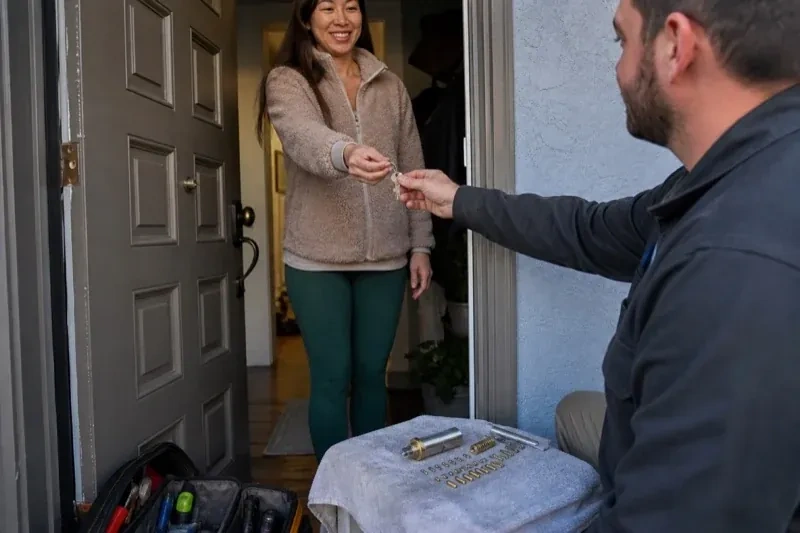
Before pins are touched, the number of keys is agreed, because that number is the whole point of key control. The locksmith asks who in the household or business needs one: each adult, a teenager, a caregiver, the neighbour who feeds the cat, the landlord, the cleaner. Each name gets a key and the total is written down. Anyone who had a copy of the old key but is not on the new list is, from that moment, simply someone without a key. Knowing the count on day one is what makes it possible, years later, to say with confidence exactly how many keys to this property exist.
Resetting a homeowner-rekeyable cylinder without its key
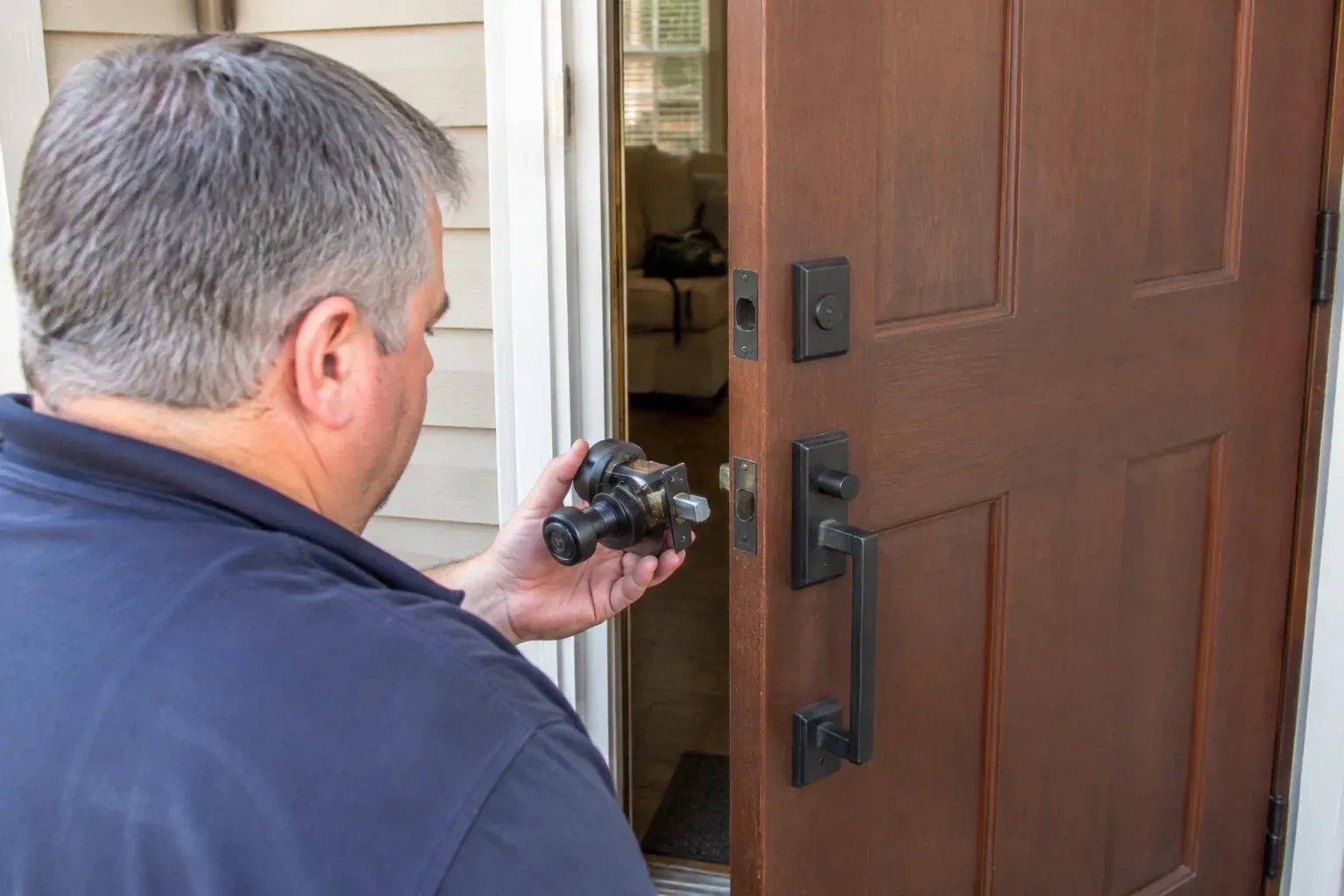
Some newer residential locks carry a small slot beside the keyway that lets a homeowner change the key with a learn tool, but only while a working key is in hand. When that key is the one that was lost, the locksmith uses the manufacturer's reset tool instead: the cylinder is pulled from the lock, seated in the reset fixture, and its internal sidebar and wafers are returned to a blank state. A new key of the right blank is then inserted, the learn tool sets the cylinder to it, and the lock goes back on the door taking the new key and rejecting the old one.
The code written down for next time
The new combination is recorded as a short code, either on a card the locksmith gives you or on the key tag, and a copy stays in the locksmith's job notes if you wish. That code is what makes future copies accurate: a key cut to code has fresh, original depths, while a copy of a worn key inherits every rounded edge. It also means a lost key years from now is met with a different code, never a repeat. Keep the card with the house papers, and when a new key is needed, ask for it to be cut from the code rather than traced from a tired one.
Lost Keys — Same-Visit Rekey
In the van
- Pin tweezers and shims
- Rekeyable-cylinder reset tool
- Code key machine
- Key blanks in common keyways
- Rekeying pin kit
What affects the quote
Same fees day, night or weekend
1Number of keys cut
New keys are cut on site and counted individually. Two for a couple or six for a household with teenagers and a sitter: name the number and the quote reflects it.
2Paperwork for a landlord or building
Where a landlord, condominium or lease requires a written record of the lock change and key count, preparing that note and any key register update is a small named item.
3Time and day of the call
A weekday afternoon and a late evening or holiday call cost the same amount for a lost-key rekey. When a stolen wallet makes the visit urgent, the locksmith still confirms the exact figure on site, once the cylinders and keys needed have been looked at.
Lost Keys — Same-Visit Rekey: questions
Does rekeying weaken the lock?
No. On a conventional pin-tumbler cylinder, the housing, springs and top pins are untouched and only the bottom pins are exchanged for the same grade of part the lock left the factory with; a homeowner-rekeyable design is reset through its own procedure instead, and a high-security cylinder may also need its sidebar or finger-pin elements reset. If the locksmith notices worn parts, replacing them is offered as a separate step, leaving the lock stronger, not weaker.
My lock is the homeowner-rekeyable type but the working key is lost. Can it still be reset?
Yes. Those cylinders let an owner change the key with a small learn tool, but only while a working key is in hand. Without one, a design such as Kwikset SmartKey is removed and placed in its own reset fixture, returning it to a blank state; other cylinder types are rekeyed by their own method instead. A new key is then set and the lock goes back on. It is a few extra minutes rather than a replacement.
Do I need to be there for the whole visit?
An authorised adult should be present at the start, for identification and to agree the list of doors and the number of keys, and at the end, to test every key and take the count. In between, the work happens at the doors and on the van, so you are free to get on with your day inside. A property manager or a family member with your authorisation can stand in if you cannot be there.
Lockout Services
Lost Keys — Same-Visit Rekey near you
One team handles every service on this page for Toronto, so a lockout can turn into a rekey, and a rekey into a properly set deadbolt, within the same visit if you want it. Each service is described separately below, but at the door they fit together as one piece of work.